Serving Treasure Valley well homes
Well Water Filtration for Treasure Valley Homes
On a private well, what comes out of the ground is what comes out of your tap. Test it first, then treat what’s actually there, with a staged system sized to your results and one honest, written price.
- Lifetime System Warranty
- Sized to your lab results
- Professional installation
- Locally ownedServing the Treasure Valley
- One written priceStandard installation included
- Talk to the owner(602) 739-3657
What’s Really in Treasure Valley Well Water
Private wells in Idaho aren’t regulated: keeping the water safe is the owner’s job. State and university studies point to the same handful of issues. Older studies are labeled with their dates; your well can be very different from your neighbor’s, which is why testing comes first.
Uranium
A 2019 Boise State / IDWR study found uranium above the 30 µg/L federal limit is present and widespread across the Treasure Valley aquifer. In its dataset, 37% of Ada County and 15.5% of Canyon County domestic wells exceeded the limit (raw well samples, not a random sample). Fewer than 2% of Ada County domestic wells are monitored for uranium by state agencies.
Nitrate
IDWR sampling from 1991–1994 found nitrate at or above 2.0 mg/L in 69% of shallow Treasure Valley sites. In Canyon County, data through 2003 showed a median of 4.8 mg/L in shallow wells (maximum 29.8; the limit is 10). Idaho DEQ designates the Northeast Star Nitrate Priority Area as degraded groundwater.
IDWR, Ground Water Quality in the Treasure Valley (1998, data 1991–1994)
Arsenic
Naturally occurring in local groundwater. IDWR’s 1991–1994 sampling listed arsenic among the constituents found above federal limits in Treasure Valley wells, and its 2021 statewide sampling found 13% of sampled wells above the arsenic limit.
Hardness
IDWR’s 1991–1994 sampling found median hardness of 189 mg/L in the shallow aquifer (69% of shallow sites hard or very hard) and 114 mg/L in the deep aquifer. Hardness dropped with well depth.
IDWR, Ground Water Quality in the Treasure Valley (1998, data 1991–1994)
Iron, manganese and sulfur odor
In Star’s basalt aquifer, the water district reports discolored water from naturally occurring iron and manganese and a rotten-egg odor from hydrogen sulfide. Veolia’s 2025 report also notes iron and manganese above aesthetic guidelines at some Boise sources.
More detail, city by city, in our Treasure Valley water quality guide.
Step one
Test your well first
Idaho Health & Welfare recommends testing for bacteria and nitrate every year, and for other contaminants like arsenic, uranium and fluoride every 3 to 5 years.
Central District Health
Ada, Boise, Elmore and Valley counties
CDH does not hand out test kits. Its staff collect private-well samples for a fee ($145 collection plus lab fees, July 2026 fee schedule), or you can take a sample to a certified lab yourself. CDH recommends testing well water once a year for bacteria and nitrate.
Visit Central District Health · (208) 375-5211
Southwest District Health
Adams, Canyon, Gem, Owyhee, Payette and Washington counties
SWDH offers free sample bottles and a $10 courier that carries samples to the state lab on Wednesdays only (drop-off cutoffs: Payette 9:30 a.m., Emmett 10:30 a.m., Caldwell 11:00 a.m.). Lab fees are billed separately.
Visit Southwest District Health · 208-455-5400
Idaho Bureau of Laboratories (state lab)
2220 Old Penitentiary Road, Boise. Accepts private well samples. Listed prices: coliform/E. coli $21, nitrate $20, arsenic $23, uranium $23, hardness $28 (form revised 08/21/2024; current fees at StateLab.idaho.gov). Coliform samples must reach the lab within 30 hours of collection, and nitrate must be tested within 48 hours.
Idaho Bureau of Laboratories, private well owner submission form (revised 08/21/2024)
Analytical Laboratories (Boise)
State-certified private lab at 1804 N. 33rd St., Boise. Published prices include coliform/E. coli $21, nitrate $22, arsenic $24, uranium $40 and hardness $22 (prices subject to change).
Free state well test: Idaho Health & Welfare lists a free kit covering 13 metals and chemicals (including nitrate, arsenic and uranium, but not bacteria) as available fall 2026 while funding lasts. It showed as sold out when we checked, and results can take up to two months.Check availability. Full details on our water testing page.
Step two
Well Water Systems We Install
Every well is different, so we build the treatment train to match your lab results, not a one-size-fits-all tank.
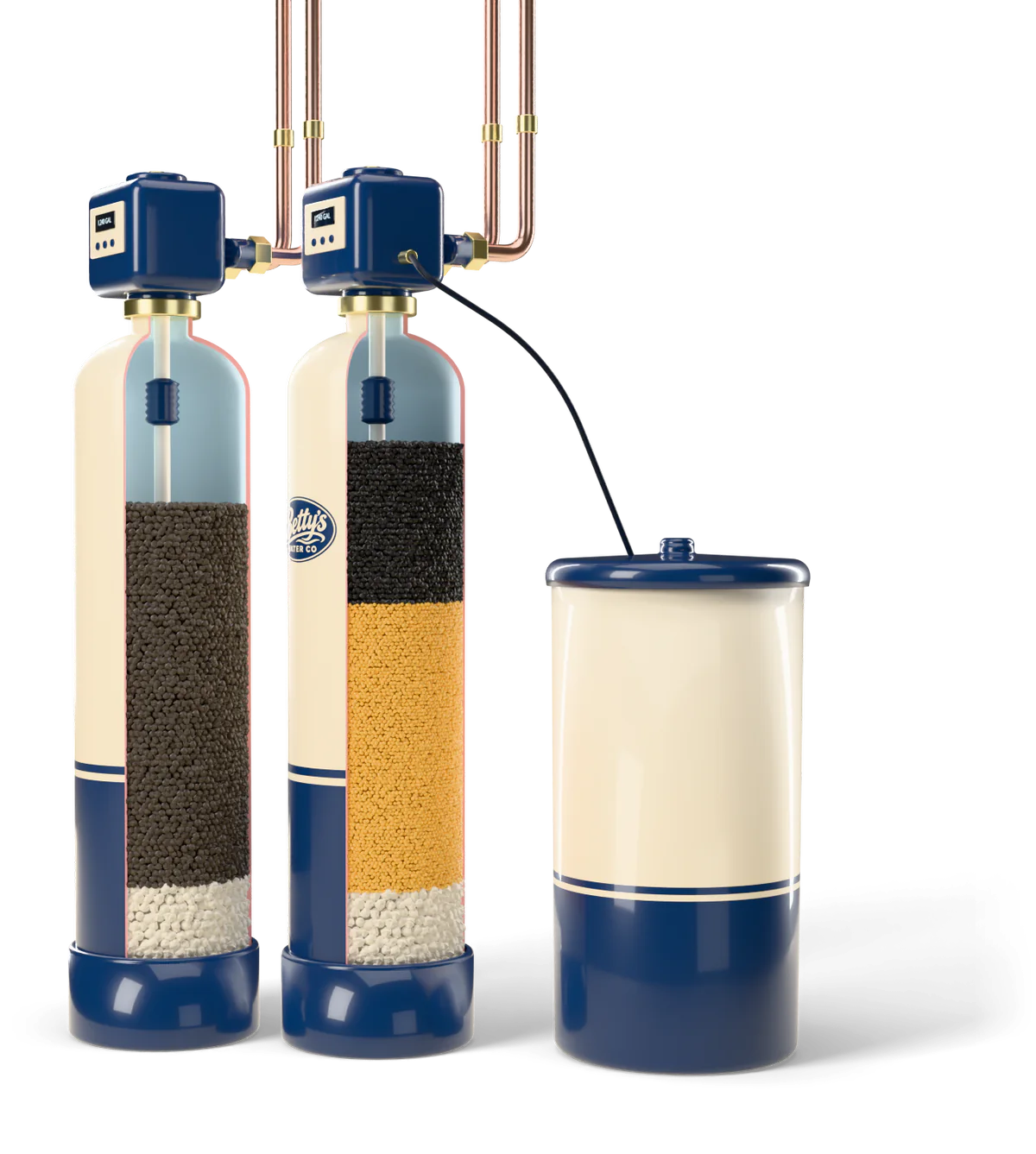
Well Water Dual-Tank System
Staged treatment for common well issues: Katalox Light media for iron and sulfur, WQA Gold Seal resin for hardness, and coconut-shell carbon for taste and odor. High-efficiency smart valves on both tanks.
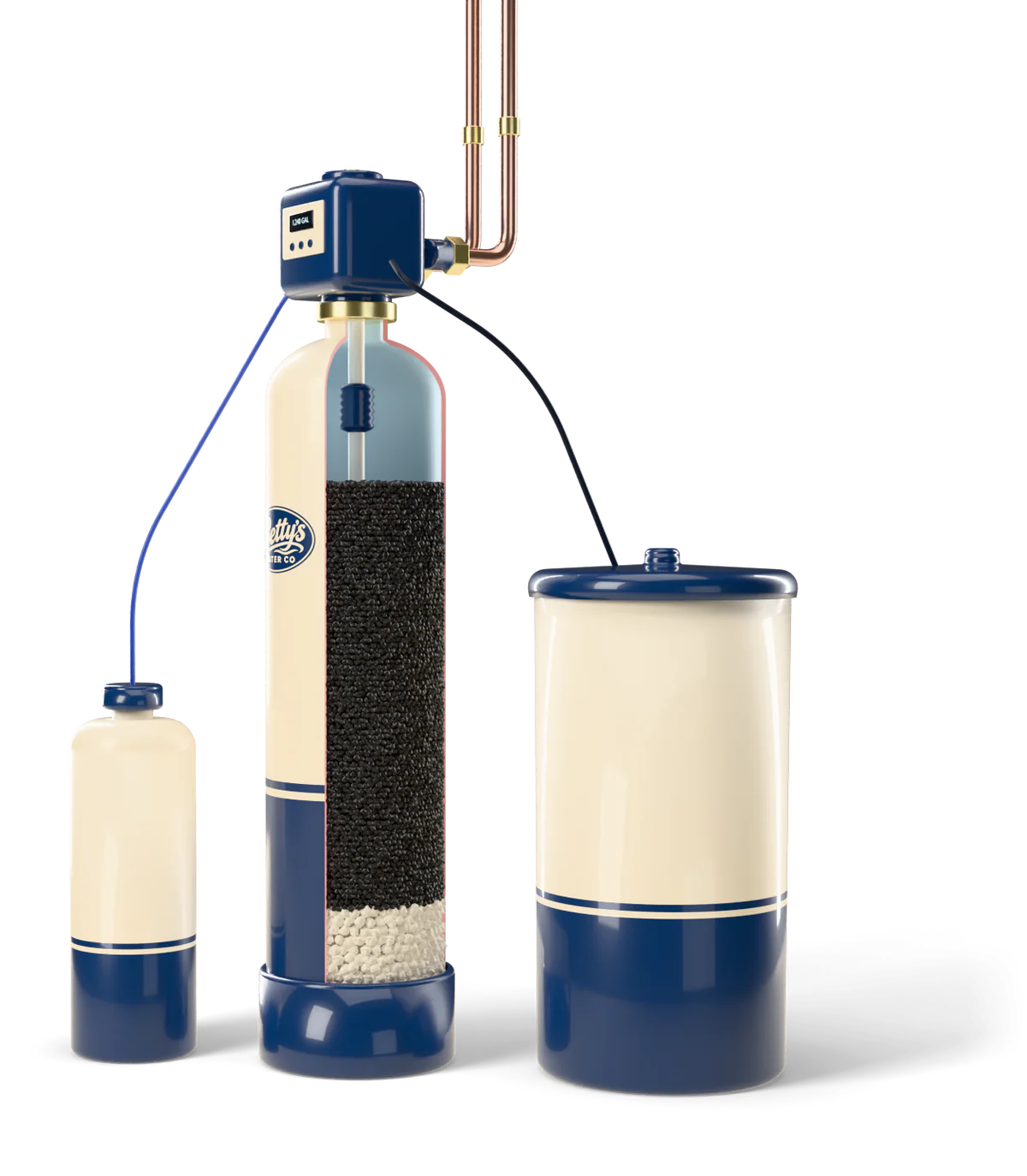
Iron & Sulfur Removal System
For high-iron wells and strong sulfur odor: hydrogen peroxide injection with catalytic carbon converts dissolved iron and sulfur into filterable particles.
For uranium, arsenic or nitrate, the right answer depends on your levels. We’ll recommend equipment certified to NSF/ANSI standards for the specific contaminant on your lab report, usually at the kitchen sink. See our reverse osmosis systems and the full whole-home lineup.
What’s Included With Every Well System Install
- A water review first: we size the system to your lab results, not a script.
- Staged treatment matched to your well: iron/sulfur media, softening resin, carbon polish.
- Professional installation: bypass, drain line and start-up included.
- System programming and a walkthrough so you know exactly how it works.
- Lifetime System Warranty: lifetime on the tanks plus a 5-year control-valve warranty.
No surprise fees, no add-ons at the door, no salesman in your living room. Written quote up front: the price you see is the price you pay, installed.
Well Water Treatment Across the Treasure Valley
- Boise Ada County
- Meridian Ada County
- Eagle Ada County
- Nampa Canyon County
- Kuna Ada County
- Caldwell Canyon County
- Star Ada County
- Garden City Ada County
- Middleton Canyon County
- Emmett Gem County
- Mountain Home Elmore County
- Treasure Valley Every town we serve
Don’t see your area? View all service areas or call (602) 739-3657.
Well water questions
How often should I test my well in the Treasure Valley?
Who tests well water near Boise?
Is there free well testing in Idaho?
My well water stains everything orange. What is it?
Why does my well water smell like rotten eggs?
Is nitrate in my well a problem for a baby?
Can you treat uranium or arsenic in well water?
Get Your Free Well Water Review
Tell us what you’re noticing at home.